Table of Contents
- Why Durable Graphic Print Methods Matter for Your Wardrobe
- The Most Durable Shirt Printing Method: Screen Printing
- Screen Printing vs DTF Durability: What the Differences Mean
- DTG vs DTF Printing: Which Lasts Longer
- How to Prevent Graphic Prints from Cracking
- Fabric Type and Construction: The Hidden Factor in Print Longevity
- Conclusion: Choosing Durable Graphic Prints That Fit Your Needs
- Frequently Asked Questions
Last Updated: October 12, 2026
Why Durable Graphic Print Methods Matter for Your Wardrobe
When you buy a graphic tee, you’re investing in a design that should look sharp for years, not fade after a handful of washes. At The T-Shirt Barn, we know durable graphic print methods for clothing separate pieces you’ll wear forever from ones that crack and peel within weeks.
The difference comes down to how the design is applied: some techniques bond ink directly to fibers, while others use transfers or heat-based processes, each with trade-offs in durability, feel, and design capability.
Understanding these durable graphic print methods helps you make smarter choices about what to buy and how to care for your apparel.
The Most Durable Shirt Printing Method: Screen Printing
Screen printing remains the gold standard for durability in graphic apparel, pushing ink through a mesh screen directly onto fabric for a bond that withstands repeated washing and wear better than most alternatives.
The ink sits on top of the fabric and cures through heat. When done properly, screen-printed designs last 50-100+ washes without significant fading or cracking, because the ink locks onto the fibers rather than absorbing into them.
Screen printing works best for bold, simple graphics with limited colors. A single-color logo outlasts almost any other method, but costs rise with each added color, so it suits high-volume orders where durability matters more than cost-per-unit.
The downside: screen printing feels heavier, since you can feel the ink layer, and it doesn’t breathe as well as alternatives, which matters in hot climates.
Screen Printing vs DTF Durability: What the Differences Mean
Direct-to-film (DTF) printing is newer technology gaining ground in custom apparel. It prints an image onto a special film, then transfers that film onto the shirt using heat and pressure, vibrant and detailed, but far less durable than screen printing.
DTF prints typically last 30-40 washes before visible fading begins, and the film layer can crack if the shirt is folded aggressively or stressed during washing.
DTF’s real advantage is versatility: photorealistic images, gradients, and complex designs impossible with screen printing, plus a softer feel from the thinner ink layer. You trade some durability for that detail.
According to fabric care guidelines from the American Cleaning Institute, how you wash affects all print durability.
DTG vs DTF Printing: Which Lasts Longer
Direct-to-garment (DTG) printing sprays ink directly onto the shirt, like an inkjet printer on paper. The ink soaks into the fibers, leaving no visible layer, just color integrated into the material.
DTG prints typically last 20-30 washes before noticeable fading. Because the ink sits inside the fibers, colors fade gradually rather than cracking suddenly, which some people prefer aesthetically.
DTG’s advantage is a completely natural feel, no difference between printed area and blank fabric. It works well on darker fabrics, though lighter colors may require pre-treatment.
DTF outperforms DTG for durability because the film layer provides a protective barrier; DTF prints eventually crack or peel, but more slowly than DTG fades. Choose DTF for longevity, DTG for comfort and natural feel.
| Print Method | Typical Durability | Best For | Print Feel |
|---|---|---|---|
| Screen Printing | 50-100+ washes | Bold, simple graphics; high-volume orders | Heavy, textured |
| DTF Printing | 30-40 washes | Detailed, multi-color designs | Thin, slightly textured |
| DTG Printing | 20-30 washes | Soft, natural feel; dark fabrics | Soft, imperceptible |
| Sublimation | 40-60 washes | Polyester, athletic wear | Very soft |
| Discharge Printing | 40-50 washes | Soft, vintage feel on cotton | Soft, natural |
The most durable graphic print methods for clothing aren’t always the most visually impressive. Screen printing wins on longevity but can feel stiff. DTF balances durability with detailed design capability. Choose based on what matters more for your specific piece: how it feels, how it looks, or how long it lasts.
How to Prevent Graphic Prints from Cracking
Most advice stops at “wash inside-out in cold water.” That helps, but the failure mode you’re preventing, cracking, peeling, fading, or ghosting, depends on the print method, the ink or film chemistry, and how the garment was produced. Care guidance only works when matched to those variables.
Match your care routine to the print method
Screen printing. Plastisol screen prints fail mainly through cracking along fold lines and, less often, fading from abrasive detergent or hot drying.
DTF (direct-to-film). The weak point is the adhesive and film layer, not the ink; heat, friction, and stretching are the enemies.
DTG (direct-to-garment). DTG ink is water-based and sits in the fibers, so it fades gradually rather than cracking. Hot water, harsh detergent, and high-heat drying accelerate color loss; cold wash and air dry give the best results.
Sublimation. Because the dye bonds into polyester fibers rather than printing on top, sublimation prints are the most wash-tolerant common method and resist cracking entirely.
Discharge printing. Discharge removes dye from the fabric rather than adding ink, so there’s no layer to crack or peel.
Diagnose the failure before you blame your laundry
When a print fails early, the cause is often production, not your washing machine. Key patterns:
- Cracking along fold lines usually points to under-curing (screen print) or insufficient heat and pressure during transfer (DTF).
- Peeling at the edges on DTF or heat-transfer vinyl means the transfer was applied too cool, too fast, or with uneven pressure.
- Fading after only a few washes on DTG often traces back to missing or uneven pretreatment on dark garments.
- A greasy or smearing print is usually under-cured plastisol; it will keep degrading no matter how carefully you wash it.
- Cracking in one localized area usually means the garment was stretched or snagged, not that the print was defective.
If a print fails this way within the first several washes, the issue is the production run, not your care routine.
Practical care rules that apply across methods
- Turn garments inside-out before washing to reduce surface abrasion.
- Use cold water and a gentle or normal cycle; skip hot water and heavy-duty cycles.
- Air dry when possible; if you use a dryer, choose low heat and remove the garment promptly.
- Skip fabric softener and bleach, both of which degrade ink bonds and film adhesives.
- Wash printed items separately from rough items like jeans, towels, and items with zippers.
- Store folded rather than hung when possible; if you hang, use padded hangers to avoid stress points.
- Spot-clean stains rather than soaking the whole garment in harsh solutions.
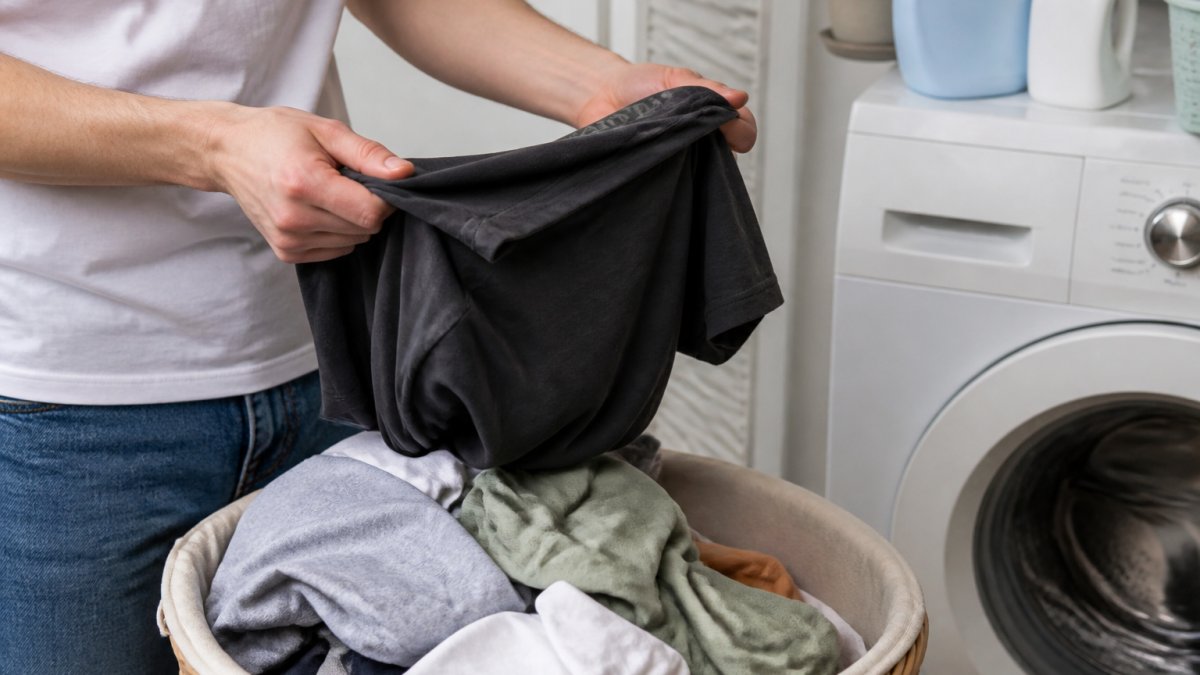
If a print cracks, peels, or fades within the first handful of washes despite careful laundering, the cause is almost always under-curing, insufficient transfer heat or pressure, or missing pretreatment. No care routine can rescue a print that was not produced correctly in the first place.
Fabric Type and Construction: The Hidden Factor in Print Longevity
Print durability is usually discussed as a property of the printing method. In reality, it’s a property of the method-plus-fabric system: the same screen print that lasts years on a heavy cotton tee can fail in months on a stretchy poly blend.
How fiber content changes adhesion and wear
100% cotton. Cotton is absorbent and slightly textured, giving plastisol screen print and DTG ink a mechanical grip, the most forgiving fabric for most print methods.
Cotton-polyester blends. A 50/50 or 60/40 blend is often the sweet spot for print longevity: the polyester adds dimensional stability, so the fabric shrinks and stretches less, transferring less stress to the print layer.
100% polyester. Polyester is ideal for sublimation, which dyes the fibers themselves and cannot crack or peel.
Stretch fabrics (spandex blends, performance knits). This is where most print failures happen.
Dark garments. Dark fabric isn’t inherently harder on prints, but it changes production requirements. DTG on dark cotton needs a white underbase and pretreatment; if either is uneven, the print fades, cracks, or shows a halo.
Why construction matters as much as fiber
Fabric weight is a useful shorthand. A heavier knit, roughly 6.5 ounces per square yard and up, provides a more stable surface and absorbs stress that would otherwise reach the print.
Weave and knit structure matter too. A tight, dense knit resists pilling and surface breakdown, keeping the print substrate smooth. A loose, open knit exposes more fiber ends to abrasion and creates weak points at the high spots.
Pre-shrinking is another underappreciated variable. If a garment shrinks after printing, the print layer compresses with the fabric and can crack, especially with DTF and plastisol screen prints. When a manufacturer skips that step, even a technically perfect print can fail in the first wash.
Durability trade-offs beyond wash count
Wash count is the easiest durability metric to quote, but not the only one that matters. A print that survives 80 washes but feels like a plastic sheet isn’t necessarily the better choice for a summer tee. Weigh these alongside longevity:
- Hand feel. Screen print is the heaviest; DTG and sublimation are the lightest; DTF sits in between.
- Breathability. Sublimation and DTG allow air through the print area; screen print and DTF block it.
- Stretch. Sublimation moves with the fabric; screen print and DTF do not.
- Abrasion resistance. Screen print resists surface wear best; DTG fades fastest under friction.
- Color retention. Sublimation holds color longest on polyester; DTG fades most gradually but earliest.
- Environmental exposure. UV light and repeated heat cycling degrade DTF films and DTG inks faster than screen print or sublimation.
The most durable graphic print methods for clothing are not durable in isolation, they are durable in combination with the right fabric. A premium screen print on a lightweight, stretchy, unshrunk blank will fail faster than a well-executed DTG print on a heavyweight, pre-shrunk cotton tee. When you evaluate a printed garment, look at the fiber content, the fabric weight, the knit structure, and whether the blank was pre-shrunk before you judge the print method alone.
Conclusion: Choosing Durable Graphic Prints That Fit Your Needs
Selecting durable graphic print methods for clothing comes down to balancing three priorities: how long the print lasts, what the design looks like, and how the shirt feels.
Screen printing wins for pure longevity but feels heavier. DTF offers a middle ground with decent durability and better design detail. DTG delivers the softest feel but fades faster. Sublimation and discharge printing serve specific use cases, athletic wear and vintage aesthetics, respectively.
The fabric matters as much as the printing method. A quality, pre-shrunk blank with tight weave construction holds any print longer than a cheap, loosely-woven shirt, so check both the printing method and the garment construction.
Frequently Asked Questions
What is the most durable shirt printing method?
Screen printing ranks as the most durable graphic print method for clothing, often lasting 100+ washes when applied correctly. The ink sits on top of the fabric rather than absorbing into it, creating a thick, resilient layer. Direct-to-film (DTF) printing runs a close second for durability. Your choice depends on design complexity, fabric type, and order size, screen printing excels for simple, bold graphics on cotton in larger quantities.
How should you wash graphic tees to help the print last?
Turn your graphic tee inside-out before washing to minimize friction between the print and the washer. Use cold water, gentle cycles, and mild detergent. Avoid bleach and fabric softeners, which degrade ink and adhesives. Air-dry whenever possible instead of using a dryer, as heat accelerates fading and cracking. Wash less frequently by spot-cleaning stains first. These practices extend print life by 20-30% regardless of printing method.
Which is more durable, DTG or DTF printing?
DTF (direct-to-film) printing is generally more durable than DTG (direct-to-garment) printing. DTF transfers ink through an intermediate film layer, creating a more flexible, crack-resistant finish. DTG prints directly onto fabric and tend to fade or crack. DTF also handles polyester and blends better, while DTG works best on 100% cotton in lighter colors.
How can you tell if a graphic tee print will last?
Check the printing method used, screen printing and DTF offer the longest lifespan. Examine the print feel: a slightly raised, flexible surface suggests durability, while stiff or plasticky prints crack sooner. Ask about pre-shrinking and curing processes; quality printers cure inks at high temperatures to bond them permanently. Review care instructions; reputable brands provide specific washing guidance. Request information about fabric blend and garment weight, heavier cotton and quality construction support longer-lasting prints.
At The T-Shirt Barn, we partner with brands like Axtacy Apparel, Good English Clothing, and Kush Dynasty League who understand that durable graphic print methods matter. Our exclusive collection features apparel printed with methods designed to last through years of wear, paired with quality construction that holds up to repeated washing. Shop Now and discover graphic tees engineered for both self-expression and longevity.