Table of Contents
- What Makes Organic Cotton Shirts Better: The Core Differences
- Organic Cotton vs. Regular Cotton Shirts: A Practical Comparison
- GOTS vs. OEKO-TEX Certification: What Each One Actually Covers
- How to Identify Organic Cotton Clothing Before You Buy
- The Downsides of Organic Cotton Clothing You Should Know
- Construction and Care: What Matters Beyond the Fiber
- Conclusion: Choosing an Organic Cotton Shirt That Fits Your Values
- Frequently Asked Questions
Last Updated: October 6, 2026
What Makes Organic Cotton Shirts Better: The Core Differences
Organic cotton is grown without synthetic pesticides, herbicides, or genetically modified seed, then processed under strict fiber-handling rules. That difference shows up in the fabric, the farming communities, and the land itself. This guide from The T-Shirt Barn walks through what organic cotton shirts actually change, and where the marketing hype outruns the reality.
Here’s the honest version: organic cotton shirts are better for how they’re grown and processed. They are not automatically softer or longer-lasting. Those qualities come from the fiber grade, the knit, and how you wash the shirt. Confusing “organic” with “premium” is a common mistake shoppers make.
So what does the label actually promise? Let’s break it down.
How Organic Cotton Is Grown
Organic cotton farming starts with the soil. Growers build fertility through crop rotation, compost, and cover crops instead of synthetic fertilizer. Pests get managed with beneficial insects, trap crops, and approved biological controls rather than routine chemical spraying.
The USDA National Organic Program standards ban synthetic pesticides and fertilizers from certified organic fields. Genetically modified seed is also off the table. Every step, from planting through harvest, has to be documented for a farm to keep its certification.
Weeds get handled mechanically, by hand or machine, which takes more labor and more passes through the field. That’s a big reason organic cotton costs more to produce.
Why Growing Practices Affect the Final Fabric
Conventional cotton is one of the most chemically intensive crops in the world, and those inputs don’t vanish at harvest. Fiber picks up residues in the field and again during processing, where conventional cotton gets scoured, bleached, and dyed with many synthetic chemicals.
Organic fiber skips the synthetic inputs at both ends. Processing facilities that handle certified organic cotton must keep it separated from conventional fiber and follow restricted chemical lists for every stage.
That matters for two groups: the farmworkers and mill staff who handle the crop daily, and the people wearing the finished shirt. Fewer synthetic chemicals in the pipeline means less residue on the fabric that sits against your skin all day.
Organic Cotton vs. Regular Cotton Shirts: A Practical Comparison
A quick summary before the details:
| Factor | Organic Cotton Shirt | Regular Cotton Shirt |
|---|---|---|
| Growing inputs | No synthetic pesticides or GMO seed | Synthetic pesticides common |
| Processing | Restricted chemical list | Wider chemical range |
| Softness | Depends on fiber grade and knit | Depends on fiber grade and knit |
| Durability | Depends on construction | Depends on construction |
| Colorfastness | Depends on dye method | Depends on dye method |
| Environmental load | Lower chemical and water risk | Higher chemical load |
Softness, Comfort, and How They Feel
Organic cotton is not automatically softer than conventional cotton. Softness comes from fiber length, the knit structure, and any finishing treatments applied to the yarn.
A long-staple organic cotton knit will feel smoother than a short-staple conventional one. Flip that around and a cheap organic tee can feel rougher than a well-made conventional shirt. The fiber’s growing method doesn’t set the hand feel.
What organic cotton does offer is a cleaner fabric. If you have sensitive skin, fewer chemical residues from processing is a real plus.
- Long-staple fiber: smoother, stronger yarn
- Combed cotton: removes short fibers for a softer feel
- Ringspun yarn: tighter, smoother surface
- Fabric weight: heavier knits feel more substantial
Durability, Colorfastness, and Wash Performance
Here’s where the organic label stops mattering. Durability comes down to fiber length, yarn thickness, stitch density, and how you care for the shirt. A well-constructed organic tee and a well-constructed conventional tee will hold up about the same.
Colorfastness works the same way. It depends on the dye type and the dyeing process, not on whether the cotton was grown organically.
- Reactive dyes bond with the fiber and hold color well through washing
- Natural dyes often fade faster and need gentler care
- Pigment dyes sit on the surface and can crack or fade over time
Wash any cotton shirt inside out in cold water and skip the dryer when you can. That single habit does more for longevity than any fiber label.
Check the care label before you buy, not after the first wash. Cold water and low heat keep cotton color and shape far longer than any fiber claim on the hangtag.
GOTS vs. OEKO-TEX Certification: What Each One Actually Covers
GOTS covers the whole supply chain, from organic farming through processing, manufacturing, and labeling. OEKO-TEX tests the finished product for harmful substances. They answer different questions, and a shirt can carry one, both, or neither.
The Global Organic Textile Standard requires certified organic fiber, restricted chemical use at every processing stage, and wastewater treatment rules. It also sets social criteria for workers.
OEKO-TEX, run through the OEKO-TEX testing system, tests finished textiles for harmful substance limits. It does not verify that the cotton was grown organically. A shirt made from conventional cotton can pass OEKO-TEX testing.
So which matters more? If you care about how the cotton was farmed, look for GOTS. If you care about what’s left in the finished fabric, OEKO-TEX tells you that. Both together is the strongest signal.
How to Identify Organic Cotton Clothing Before You Buy
Start with the certification, not the marketing copy. “Made with organic cotton” and “organic” are not the same claim, and only a certified label backs it up.
- Look for a GOTS or USDA Organic certification number on the label or product page
- Search that number in the certifier’s public database
- Treat vague terms like “natural” or “eco-friendly” as unverified
- Check the fiber percentage: blends with polyester are not fully organic
- Ask the seller for the certifier name if it’s not listed
A cotton blend with synthetic fiber can’t be certified organic as a finished product, because the polyester portion isn’t organic. That’s a quick filter when you’re scanning listings.
“Organic” on a hangtag means nothing without a certifier behind it. If a seller can’t name the certification body, you’re paying a premium for a word.
The Downsides of Organic Cotton Clothing You Should Know
Organic cotton costs more, and that’s not a marketing trick. Lower yields, hand weeding, and separate processing lines all add cost. Expect to pay more for a certified shirt than for a conventional one.
Supply is limited too. Organic cotton makes up a small share of global cotton production, so certified fabric can be harder to source and slower to restock.
There are quality trade-offs as well. Natural dyes, common in organic lines, tend to fade faster than synthetic reactive dyes. Some organic knits are lighter weight than conventional equivalents.
And the label only covers the fiber. A certified organic shirt can still be poorly sewn, badly sized, or made in a factory with weak labor practices. Certification is one piece of the picture, not the whole thing.
Construction and Care: What Matters Beyond the Fiber
A certified fiber means little if the shirt falls apart in three washes. Judge the finished garment, not just the label.
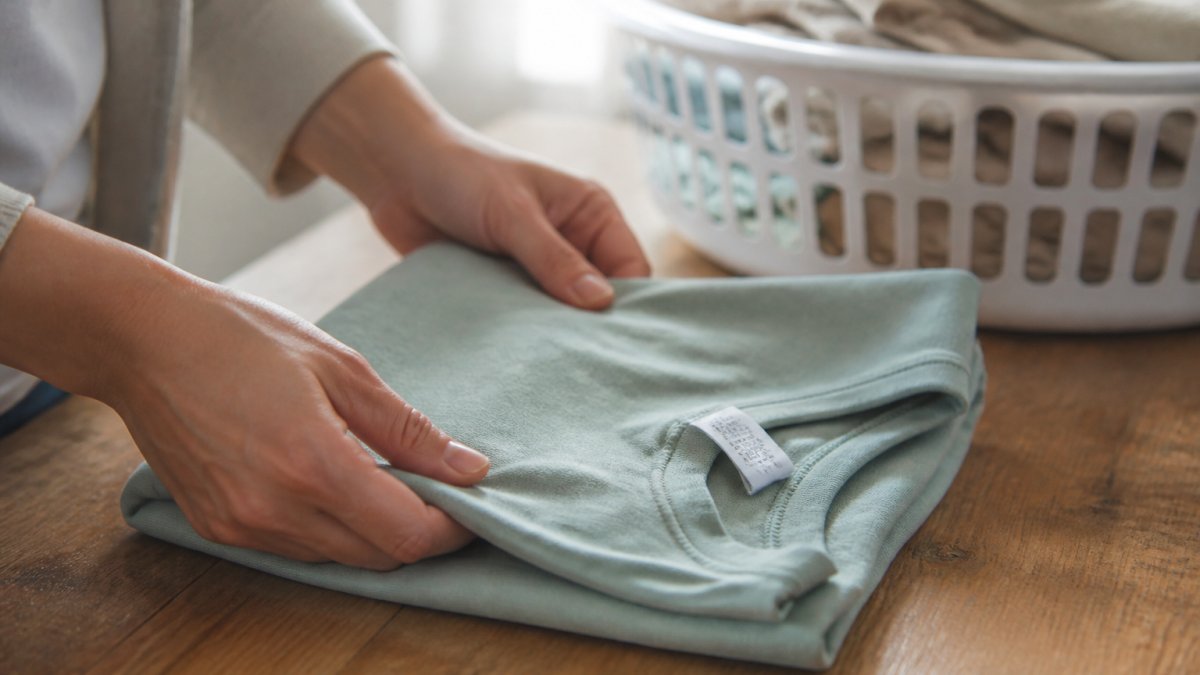
Check the stitching at the seams, hem, and shoulder. Double-stitched seams and reinforced shoulder tape hold shape longer. Look at the fabric weight: a heavier knit drapes better and resists thinning.
Then read the care label and follow it.
- Wash in cold water to protect color and fiber
- Turn the shirt inside out to reduce surface wear
- Skip the dryer or use low heat
- Wash with similar colors to limit dye transfer
A common mistake is treating an expensive organic tee like a disposable one. Care is what actually determines how long the shirt lasts.
At The T-Shirt Barn, we carry graphic tees from Axtacy Apparel, Good English Clothing, and Kush Dynasty League, with original designs printed on quality blanks.
Conclusion: Choosing an Organic Cotton Shirt That Fits Your Values
The real challenge isn’t finding an organic label. It’s finding a shirt that’s certified, well-built, and made to last.
At The T-Shirt Barn, we stock original graphic tees from brands like Axtacy Apparel, Good English Clothing, and Kush Dynasty League, all printed on quality blanks. Our inclusive designs let you express your personality without settling for mass-produced basics. Shop now and find a shirt that fits your values and your style.
Frequently Asked Questions
What are the downsides of organic cotton clothing?
Organic cotton clothing often costs more to produce because organic farming yields less fiber per acre and certification adds expense. It can also be less colorfast with natural dyes, and supply is limited, so designs and sizes sell out faster. Some organic shirts feel less soft at first than conventional cotton treated with chemical softeners. These trade-offs do not make organic cotton worse, but they are real reasons the price and availability differ from regular cotton.
Which is better, Oeko-Tex or GOTS?
They measure different things. GOTS covers the entire supply chain, from organic farming through processing, and requires a minimum of 70% organic fibers. Oeko-Tex certifies that a finished textile is free from harmful substances, but it does not require organic farming. For a shirt to be truly organic, look for GOTS. Oeko-Tex is a useful safety check on its own, but it does not verify organic content.
Are organic cotton shirts more durable than regular cotton shirts?
Fiber length and fabric construction matter more than the organic label. Long-staple organic cotton like Pima can be stronger and pill less, but a thin organic shirt may wear out faster than a thick conventional one. Look at the fabric weight and stitching, not just the fiber. With proper care, a well-made organic cotton shirt can last as long as or longer than a regular cotton shirt.
How can you tell if a cotton shirt is genuinely organic?
Check the label for a certification logo such as GOTS or USDA Organic, and look for a certification number you can verify on the certifier’s website. Be wary of vague terms like ‘natural’ or ‘eco-friendly’ without a certifier name.