Table of Contents
- Why Screen Printed Designs Crack
- Screen Printing Ink Curing Problems
- How to Wash Screen-Printed Shirts
- How Long Do Screen-Printed Shirts Last
- How to Fix Cracked Screen Print
- Frequently Asked Questions
Last Updated: October 11, 2026
Why Screen Printed Designs Crack
Screen printed designs crack for three main reasons: the ink wasn’t fully cured, too much ink was applied to the fabric, or the garment itself stretches in ways the print can’t follow. Customers are often frustrated by cracking prints, and the good news is that most of these issues are preventable.
Understanding what causes cracking helps you choose better shirts and care for them properly. The difference between a print that lasts years and one that fails in weeks often comes down to how the shirt was made and how you wash it afterward.
Under-Curing and Ink Film Problems
Under-curing is the biggest culprit behind cracking screen printed designs. When ink isn’t heated long enough during production, it doesn’t fully bond to the fabric. The ink film stays brittle instead of flexible.
A properly cured plastisol ink should feel slightly rubbery when you touch it. If it feels stiff or papery, that’s a sign of under-curing. The ink sits on top of the fabric rather than bonding with the fibers. Every time you wash or wear the shirt, the print flexes and cracks.
The curing process requires specific heat and time. Most printers use a conveyor dryer set to reach the right temperature. If the conveyor moves too fast or the heat isn’t high enough, the ink never fully cures. This is a production issue, not something you can fix at home.
Excessive Ink Deposit and Print Thickness
Too much ink applied in a single pass creates a thick, inflexible film. Thick prints crack because they can’t move with the fabric underneath. The ink becomes like a plastic shell rather than a flexible coating.
Screen printers control ink thickness by the mesh count they use and how much pressure they apply. A lower mesh count (like 110) deposits more ink. A higher mesh count (like 305) deposits less. For designs with large solid areas, printers should use multiple passes with thinner deposits rather than one heavy pass.
The problem gets worse with stretch fabrics. Activewear and fitted shirts need thinner ink deposits because the fabric moves more. A thick print on a stretchy shirt will crack within a few washes.
Screen Printing Ink Curing Problems
Curing problems are where theory meets reality in screen printing. Many printers rush this step or don’t monitor it carefully enough.
Cure Temperature and Heat Damage
The cure temperature needs to be precise. Plastisol ink typically requires 320-330°F at the surface of the print. Too low and the ink doesn’t fully cure. Too high and you damage the fabric or the ink itself.
Heat damage shows up as yellowing or brittleness in the print. The fabric can also scorch or shrink if the temperature climbs too high. This creates a different kind of cracking: the fabric shrinks but the print doesn’t, so they separate.
A good printer uses a temperature gun to verify the actual heat at the print surface, not just the dryer setting. The difference between a dryer set to 350°F and the actual print temperature can be 30-40 degrees.
Plastisol vs. Water-Based Ink
Plastisol ink and water-based ink cure differently and behave differently on fabric. Plastisol is PVC-based and requires heat curing. Water-based ink dries through evaporation and requires lower heat.
Plastisol prints are generally more durable once properly cured. They sit on top of the fabric and create a protective barrier. Water-based prints absorb into the fabric fibers, which can make them feel softer but also more prone to fading.
Neither type should crack if properly applied and cured. The difference matters mainly for how the print feels and how it ages. Plastisol prints stay more rigid. Water-based prints soften over time but can feel more natural against skin.
How to Wash Screen-Printed Shirts
How you wash a graphic tee matters as much as how it was made. Washing is where most people accidentally damage their prints.
Wash Temperature and Cycle Settings
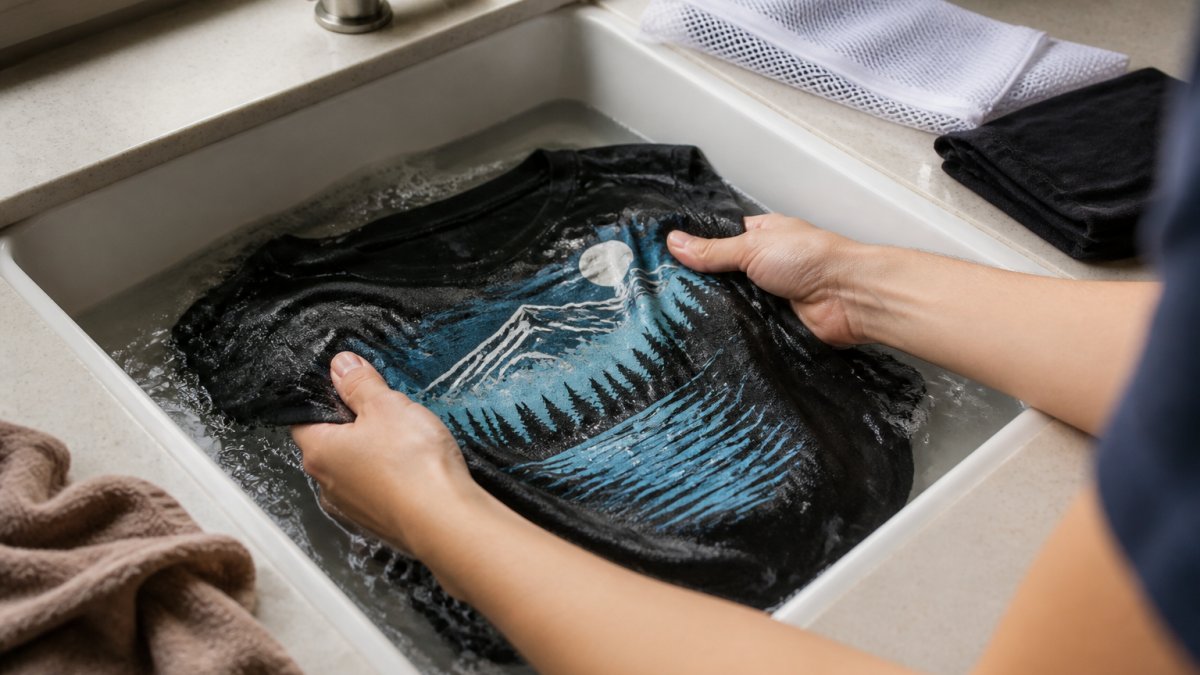
Cold water is non-negotiable for screen-printed shirts. Hot water weakens the ink adhesion and can cause the print to crack or peel. Warm water is also risky. Cold water only.
Use a gentle cycle or hand wash. The agitation of a regular cycle puts stress on the print. Gentle cycles use less mechanical action, which means less flexing of the print.
Turn the shirt inside out before washing. This protects the print from direct contact with the wash drum and other clothes. The inside-out approach is simple but makes a real difference over time.
| Wash Setting | Best For | Risk Level |
|---|---|---|
| Cold water + gentle cycle | All screen prints | Lowest |
| Cold water + regular cycle | Heavy-duty fabrics only | Medium |
| Warm water + any cycle | Not recommended | High |
| Hot water + any cycle | Avoid completely | Highest |
Drying Methods to Avoid Heat Damage
The dryer is where most cracking happens after washing. High heat damages the ink and can cause it to crack and peel away from the fabric.
Air drying is the safest option. Hang the shirt or lay it flat to dry. This takes longer but adds years to the life of the print. If you must use a dryer, use the lowest heat setting and remove the shirt while it’s still slightly damp.
Never use high heat or extended drying times. The print flexes as the fabric shrinks in the dryer. High heat makes that flexing more dramatic and the ink more brittle. Low heat or no heat keeps the print intact.
How Long Do Screen-Printed Shirts Last
A well-made screen-printed shirt can last 5-10 years or more with proper care. A poorly made one might crack after a few washes. The difference is curing, ink deposit, and how you care for it.
The first 5-10 washes are critical. If a print survives that without cracking, it’s usually a sign the curing and ink application were done right. Prints that crack early indicate under-curing or excessive ink deposit.
Over time, even well-cured prints fade slightly. This is normal aging, not a defect. The print might also soften as the ink relaxes. Actual cracking shouldn’t happen if the print was made correctly.
How to Fix Cracked Screen Print
Once a screen printed design cracks, your options depend on the size, depth, and location of the damage. Understanding what can realistically be repaired versus what requires replacement will save you time and money.
Assessing Your Cracked Print
Before attempting any repair, determine the type and extent of the damage:
- Hairline cracks: Thin lines running through the print, usually from the design flexing during wear or washing. The ink is still mostly bonded to the fabric.
- Deep cracks: Visible splits that go through the entire ink film, often exposing the fabric underneath. These indicate under-curing or excessive ink thickness.
- Peeling: Edges or sections of the print lifting away from the fabric. This is different from cracking and suggests poor ink-fabric adhesion.
- Spiderweb cracks: Multiple cracks radiating from a central point, usually caused by the fabric shrinking while the rigid print does not.
When DIY Repair Is Possible
Small hairline cracks can sometimes be sealed with flexible fabric paint or textile glue designed to move with the fabric. This approach works best if:
- The crack is less than 2 inches long
- The crack does not go completely through the ink film
- The surrounding print is still firmly bonded to the fabric
- The shirt is not a high-value item (the repair will be visible)
To attempt a DIY repair:
- Clean the cracked area and let it dry completely
- Apply a thin layer of flexible fabric paint or textile adhesive into the crack using a small brush or applicator
- Smooth the surface and remove excess material
- Allow to cure per the product instructions (typically 24 hours)
- Wash gently in cold water to test the repair
Expect the repair to be visible and not restore the print to its original appearance. The repaired area may feel slightly raised or textured. This approach extends the life of the shirt but is not a permanent fix.
When Professional Reprinting Is Worth It
If the crack is large, deep, or covers a significant portion of the design, professional reprinting is more effective than DIY repair. A screen printer can strip the old print and apply a new one, though this costs $8-$20 per shirt depending on design complexity.
Reprinting is worth considering if:
- The shirt itself is in excellent condition (no fading, holes, or wear)
- The design is custom or sentimental (not easily replaced)
- The original printer or a local shop can match the original design and colors
- You plan to keep the shirt for several more years
Contact the original printer or a local screen printing shop for a reprinting quote. Provide a photo of the original design if possible. Some printers offer reprinting discounts if you return to them, especially if the original cracking was due to their under-curing or excessive ink application.
When Replacement Is the Better Choice
In most cases, replacement is the most practical option:
- The cracking is severe or covers multiple areas
- The shirt has other signs of wear (fading, pilling, stretched collar)
- The design is not custom or sentimental
- The cost of reprinting approaches or exceeds the cost of a new shirt
- You want to avoid the risk of the same cracking problem recurring
When buying a replacement, look for signs of quality curing and ink application: the print should feel slightly rubbery (not stiff or papery), the edges should be clean and well-defined, and the design should not feel excessively thick. Avoid shirts with prints that feel like a plastic shell; these are more likely to crack within a few washes.
Preventing Future Cracking
Whether you repair, reprint, or replace, prevent the same problem from happening again by:
- Washing in cold water on a gentle cycle
- Turning the shirt inside out before washing
- Air drying or using the lowest dryer heat setting
- Avoiding hot water and high heat entirely
- Checking that the new print feels flexible, not rigid, when you receive it
Frequently Asked Questions
Why do screen printed designs crack after washing?
Screen printed designs crack when the ink film loses flexibility. This happens due to under-curing (ink not fully hardened at the correct cure temperature), excessive ink deposit that’s too thick and brittle, or poor adhesion between the ink and fabric. Washing and wearing cause the fabric to flex, and if the print can’t move with it, the ink film fractures. Fabric stretch, high dryer heat, and low-quality ink also contribute to cracking.
How should you wash screen-printed shirts to prevent cracking?
Wash screen-printed shirts inside-out in cold water on a gentle cycle to minimize stress on the print. Avoid bleach and fabric softener, which weaken ink adhesion. Air-dry whenever possible; high dryer heat accelerates aging and print damage. Limit washing frequency.
Can a cracked screen-printed design be fixed?
Minor surface cracks may be sealed with fabric paint or flexible adhesive, but results are rarely seamless. Deep cracks that expose the fabric underneath cannot be reliably repaired. Prevention is far more effective than repair. If cracking is severe, replacement is usually the better option.
How long do screen-printed shirts last with proper care?
Well-made screen-printed shirts typically last 50-100+ washes when cared for correctly. Longevity depends on ink type, cure quality, fabric weight, and washing habits. Shirts with proper curing, appropriate ink deposit, and good fabric-ink adhesion resist cracking much longer. Air-drying, cold water washing, and gentle handling extend durability significantly compared to high-heat drying and frequent hot washes.