Table of Contents
- Why Authentic Independent Designs Are Worth the Hunt
- How to Spot Stolen Art on Clothing
- How to Verify Clothing Brand Authenticity
- Best Independent Graphic Tee Brands to Start With
- Platform-Specific Search Strategies for Independent Labels
- The Economics of Independent Pricing: Why Authentic Costs More
- Conclusion: Your Next Step Toward Authentic Style
- Frequently Asked Questions
Last Updated: October 4, 2026
Why Authentic Independent Designs Are Worth the Hunt
The difference between a graphic tee that lasts five years and one that fades in five washes comes down to who made it and how.
This guide from The T-Shirt Barn breaks down how to spot stolen art, verify a brand’s legitimacy, and find independent labels worth your money.
The payoff goes beyond owning something unique: you’re supporting creative freedom, ethical manufacturing, and the maker movement that keeps originality alive.
How to Spot Stolen Art on Clothing
Stolen art on clothing is artwork lifted from an independent artist and printed without permission or payment. Spotting it takes about two minutes.
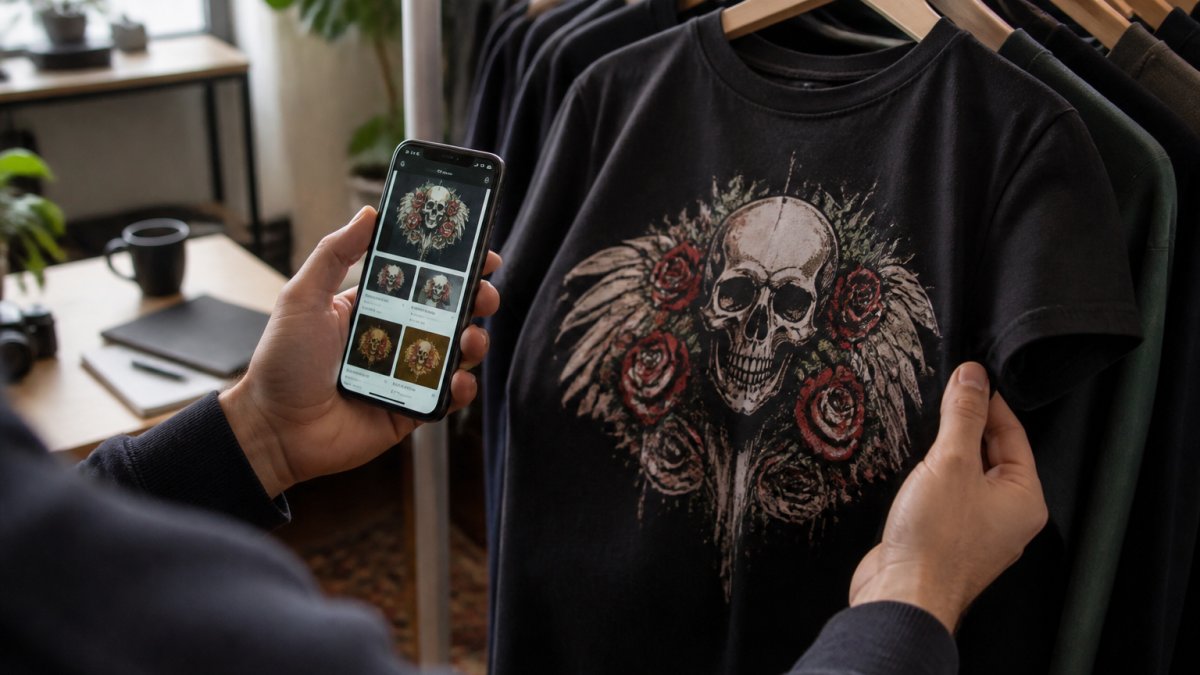
The biggest giveaway is a design that appears on dozens of unrelated storefronts with no attribution to any artist. Real independent labels name their designers. Copycats don’t.
Reverse Image Search and Design Lineage Checks
Run the design through a reverse image search before you buy. Crop the graphic tightly, upload it, and scan the results.
- If the same art shows up on print-on-demand marketplaces with different brand names, it’s likely stolen
- If the original artist’s portfolio appears first, you’ve found the real source
- If nothing matches, the design may be AI-generated or scraped from a private portfolio
A design lineage check goes further: look for the artist’s name on the brand’s site, Instagram, or a portfolio link. Authentic brands show their design narrative and credit their artists.
Red Flags of Mass-Produced Copycats
Watch for these warning signs:
- No artist credit anywhere on the product page
- Stock photos instead of real product shots
- Dozens of near-identical designs under one brand
Buying a knockoff design doesn’t just hurt the artist. It funds the same supply chains that undercut every independent label trying to pay fair wages. Once you spot one copycat seller, check whether their whole catalog is scraped.
How to Verify Clothing Brand Authenticity
Verifying clothing brand authenticity means confirming a brand actually designs, produces, and stands behind its own work.
Brands that pass this test talk openly about their production process, supply chain transparency, and the artists they work with. Those that dodge those questions have something to hide.
The 7-Point Authenticity Verification Checklist
Use this checklist before you buy from any new brand:
- Artist credit: The product page names the designer or studio
- Original photography: Real product shots, not stock or mockups
- About page depth: The brand explains who runs it and where it produces
If a brand fails three or more points, walk away. If it passes five or more, it’s worth a closer look.
Screenshot the product page before you buy. If the design disappears or the artist credit vanishes later, you have proof of what you were sold. This matters most with small brands that rebrand often.
Best Independent Graphic Tee Brands to Start With
The best independent graphic tee brands credit their artists, produce in small batches, and build a clear design narrative around each drop.
The T-Shirt Barn is our top pick for original, inclusive graphic apparel without the guesswork.
What sets us apart:
- Exclusive retailer for brands you won’t find on mass-market sites
- Inclusive apparel for LGBTQ+ and straight communities alike
- Affordable pricing that doesn’t cut corners on print quality
A common mistake is chasing the biggest catalog instead of the right one. A thousand scraped designs aren’t worth one original piece you’ll wear.
Platform-Specific Search Strategies for Independent Labels
Finding independent labels depends on which platform you’re searching. Each rewards a different approach and has its own tells for dropshippers and resellers.
Etsy: Filter Out Resellers Before You Click
Etsy’s search is the easiest to game, so it’s the easiest to filter once you know the levers.
- Use the shop location filter. Set it to your state or region. Resellers rarely bother faking a local address, and independent makers usually list one.
- Sort by “Newest” instead of “Relevance.” Resellers flood relevance rankings with high-volume listings. Newest surfaces small shops that just launched a drop.
- Read the About section, not the listing. Real independent sellers describe their studio, their process, and often name themselves. Resellers paste generic copy like “we are passionate about quality.”
A common pattern: search a design theme plus “handmade” or “hand printed,” then apply the location filter. That cuts reseller noise faster than any hashtag.
Instagram and TikTok: Follow the Artist, Not the Brand
Social platforms reward the opposite instinct. Don’t search for brands. Search for the people who make the work.
- Search hashtags like #independentapparel, #smallbatchclothing, #graphicteedesign, #printmaker, and #studiolife. Then switch to the “Recent” tab, not “Top.” Top results are dominated by accounts with ad budgets. Recent results surface actual makers.
- Follow the artist’s account, not just the brand account. Artists post process videos, sketches, and drop announcements before the brand does. If a brand has no artist account attached, that’s a signal.
- Use the “Tagged” tab on a brand’s profile. Real customers tag real purchases. Resellers have tagged tabs full of reposted stock images.
Google: Use Operators, Not Just Keywords
Google is where most people give up, because the first page is dominated by large retailers. A few operators change that.
- Search
"[design theme]" + "independent brand" -site:amazon.com -site:etsy.comto strip out the two biggest reseller aggregators. - Add
"hand printed"or"small batch"in quotes. These phrases appear on real maker sites and almost never on dropshipper pages. - Search
"[brand name]" + "studio"once you find a candidate. If the only results are product listings, the brand may not have a real studio presence.
Local Markets and Pop-Ups: The Highest-Signal Channel
At a market, you can do in thirty seconds what takes thirty minutes online: ask the maker directly.
- Ask where they print. A real independent will name a local print shop, a cut-and-sew studio, or their own setup. A reseller will give a vague answer about “our manufacturer.”
- Ask who designed the piece. If they hesitate or say “our team,” that’s a flag. Real makers usually name themselves or a collaborator.
- Ask about the blank. Independent labels often know their blank supplier by name. Resellers rarely do.
- Look at the booth itself. Hand-written signage, a small card reader, and a limited run of designs are all signals of a real independent operation.
The fastest way to find authentic independent designs is to follow the artist first and the brand second. Artists lead you to real work. Brands alone can lead you to copycats. On every platform, the move is the same: filter for the human, not the catalog.
The Economics of Independent Pricing: Why Authentic Costs More
Authentic independent designs cost more because small-batch production costs more. Pricing is one of the most reliable authenticity signals you can read before you buy.
Here’s where your money goes when you buy from a real independent label:
| Cost Factor | Mass-Produced Tee | Independent Tee |
|---|---|---|
| Design | Scraped or AI-generated | Paid artist commission |
| Production | Overseas bulk printing | Small-batch or cut-and-sew |
| Materials | Cheapest available blanks | Quality blanks, tested inks |
| Artist royalty | None | Paid per sale |
| Marketing | Paid ads at scale | Word of mouth, community |
A mass-produced tee can be sold cheaply because nobody in the chain is paid fairly. An independent tee costs more because the artist, printer, and brand all get paid.
Why Small-Batch Production Costs More Per Unit
A large factory might print ten thousand units of one design in a single run, spreading setup costs, screen prep, and labor across all ten thousand.
Add a paid artist commission, a quality blank, and a per-sale royalty, and the independent tee’s cost basis is structurally higher. That’s not inefficiency. That’s the actual cost of making something original at small scale.
How to Read Pricing as an Authenticity Signal
Pricing is one of the few signals you can evaluate before contacting a brand:
- Suspiciously low prices on a graphic tee are a red flag, not a deal. If a tee is priced below what a quality blank alone typically costs at retail, the design was almost certainly not commissioned and the print method is almost certainly the cheapest available.
- A price that matches the market for quality blanks plus a reasonable markup is a good sign. It suggests the brand is paying for materials and labor rather than cutting both.
- Look for pricing consistency across a catalog. A real label prices its work consistently because its costs are consistent. A reseller’s prices swing wildly because they’re repricing scraped listings.
- Watch for permanent “sales.” A brand that runs a 60% off sale every week is telling you the original price was never real.
Supply Chain Transparency: What Real Brands Actually Disclose
Transparency isn’t a buzzword. It’s a set of specific disclosures you can check.
A brand that is genuinely transparent about its supply chain will typically name:
- The blank manufacturer it uses, or at least the country of origin
- The print method (screen print, DTG, embroidery) and often the shop that does it
- The artist behind each design, by name or handle
- The production run size for a given drop, or at least whether it’s limited
A brand that is not transparent will use phrases like “ethically made,” “premium quality,” and “sustainably sourced” without naming a single supplier, method, or person. That’s the pattern to watch for. Vague virtue language without specifics is the most common form of greenwashing in apparel.
“Eco-friendly” and “sustainable” are not regulated terms in apparel marketing. If a brand uses them without naming a certification, a supplier, or a specific practice, treat the claim as marketing until proven otherwise.
The Trade-Off You’re Actually Making
What most guides miss is that independent pricing isn’t just about quality, it’s about design integrity. You’re paying for a design that exists because someone chose to make it, not because an algorithm scraped it.
If you’re coming from fast fashion, expect to pay more per shirt, and expect it to last longer if the brand uses quality blanks and proper print methods.
Federal Trade Commission guidance on environmental marketing claims
Conclusion: Your Next Step Toward Authentic Style
The hardest part of buying independent isn’t finding designs. Once you can spot stolen art, verify a brand’s story, and understand why authentic design costs more, you stop wasting money on shirts that fade in a month.
At The T-Shirt Barn, we’ve built our catalog around original work from Axtacy Apparel, Good English Clothing, and Kush Dynasty League.
Shop now and find the design that actually says what you want to say.
Frequently Asked Questions
How can you tell if a graphic design is original or stolen?
Run a reverse image search on the artwork and check the designer’s portfolio for a consistent style. Look for watermarks, low-resolution prints, or designs that appear on multiple unrelated sites. Authentic independent designs usually have a visible artist credit, a design narrative, and a clear release date. If the same graphic appears on dozens of generic storefronts with no attribution, it is likely stolen or mass-produced.
What should I look for when shopping for independent apparel?
Check for transparency about the production process, including cut-and-sew details and small-batch production notes. Look for a named designer or studio, original design aesthetics, and customer reviews that mention quality and fit. Brands that share their supply chain and ethical manufacturing practices are more likely to sell authentic independent designs. Avoid listings with generic product photos and no brand story.
How do I verify if an online store is selling authentic independent designs?
Use the 7-point checklist: look for a consistent design portfolio, check social media for behind-the-scenes content, verify the return policy, look for original photography. A legitimate independent label will have a verifiable presence and a clear point of view.
Where can I find unique graphic tees from independent artists?
Start with curated platforms that vet their designers, then use platform-specific search strategies like filtering by ‘handmade’ or ‘small-batch’ on marketplaces. Follow independent fashion blogs and design showcases. Visit local maker markets and pop-ups. For online, look for brands that specialize in niche markets and carry exclusive labels. The T-Shirt Barn, for example, carries exclusive brands like Axtacy Apparel and Good English Clothing.