Table of Contents
- Check the Fabric Weight and Feel First
- The Best Fabric for Graphic Tees: Cotton, Blends, and What to Avoid
- Inspect the Stitching and Construction
- Evaluate the Print Quality and Ink Type
- How to Tell If a T-Shirt Will Shrink Before You Buy
- How to Wash Graphic Tees to Protect Your Investment
- How to Prevent T-Shirt Print Cracking
- Conclusion
- Frequently Asked Questions
Last Updated: September 21, 2026
Check the Fabric Weight and Feel First
The fastest way to learn how to tell if a t-shirt is good quality is to check its fabric weight, measured in grams per square meter (GSM). Most cheap promotional tees land between 140 and 160 GSM, while a shirt built to last usually starts at 180 GSM and climbs from there.
Hold the shirt up to a light source. If you can read text through it, the fabric is too thin for anything beyond a layered look. Squeeze a section between your fingers and release. Good cotton springs back into shape; weak cotton stays wrinkled or stretched.
Grams per Square Meter Explained
Grams per square meter (GSM) is a measurement of fabric density: it tells you how much fiber is packed into one square meter of material. A higher number means a heavier, denser knit.
Here’s how the ranges break down in practice:
- Under 150 GSM: Sheer, lightweight, best avoided for standalone wear
- 150-180 GSM: Standard retail weight, fine for layering but prone to wear
- 180-220 GSM: Solid everyday territory, holds shape through repeated washing
- 220+ GSM: Heavyweight, structured, often used for premium streetwear
The Textile Exchange’s materials guidance notes that fiber density and yarn quality together determine durability more than weight alone, so treat GSM as your starting filter, not the final verdict.
Ask the seller for the GSM before you buy. If they can’t or won’t tell you, that silence usually answers the question for you.
The Best Fabric for Graphic Tees: Cotton, Blends, and What to Avoid
The best fabric for graphic tees is 100% ring-spun cotton or a cotton-poly blend with at least 60% cotton, because both hold print detail well and resist the pilling that plagues low-grade carded cotton. Ring-spun yarn goes through extra combing and twisting, producing a smoother, stronger thread.
Combed cotton sits between basic carded cotton and ring-spun in quality. It removes short fibers, which reduces roughness and pilling, though it’s not as durable as ring-spun. Tri-blends (cotton, polyester, rayon) feel soft and drape well, but the rayon content can cause shrinkage and print adhesion issues if the manufacturer cuts corners.
What should you avoid? Fabric with a high polyester count and a slick, shiny finish. It traps heat, pills quickly, and often signals a shirt designed for cost, not longevity. Also skip anything labeled simply “cotton blend” without percentages. That vagueness usually hides a low cotton content.
Run your palm across the surface. Quality cotton feels smooth with a slight texture. Cheap fabric feels either slick and synthetic or rough and fuzzy.
Inspect the Stitching and Construction
Knowing how to tell if a t-shirt is good quality starts with stitching, which reveals more than almost any other feature. Look at the hem, the side seams, and the shoulder joins before you look at anything else.
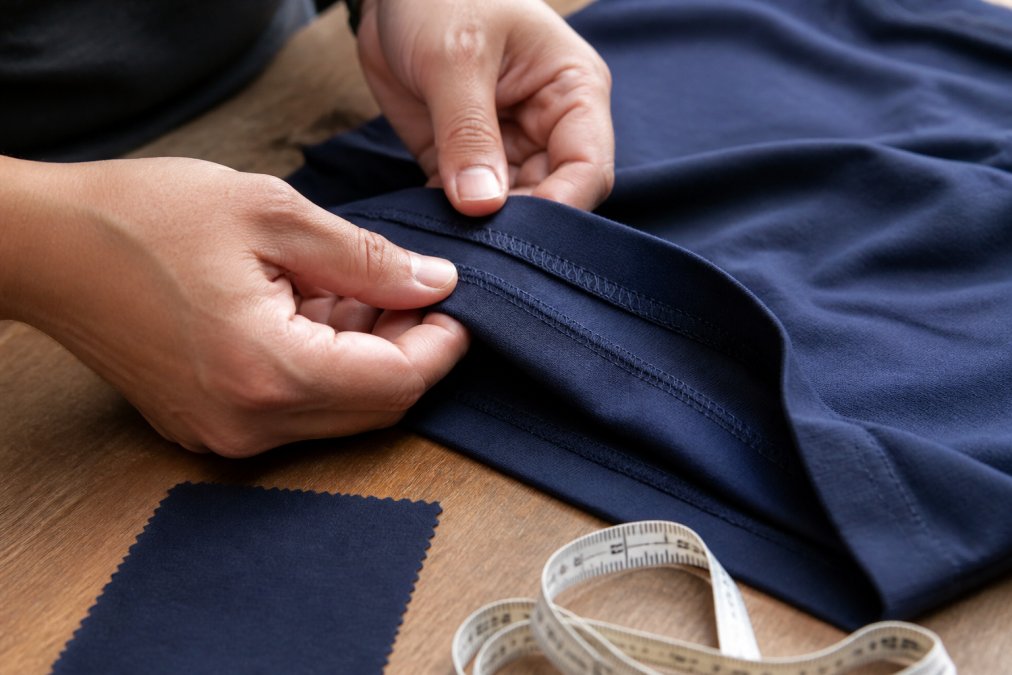
A well-made shirt uses tight, even stitches with no loose threads or skipped sections. Double-stitched hems and taped shoulder seams hold up far better than single-stitched versions. If the seams look wavy, puckered, or uneven, the shirt was rushed through production.
Stitch Density and Seam Types
Stitch density refers to the number of stitches per inch along a seam. Higher density means a stronger join that resists pulling and fraying.
Check these specific areas:
- Shoulder seams: Should be taped or reinforced; this is where stress concentrates
- Side seams: Look for a continuous, straight line with no gaps
- Bottom hem: Double-stitched hems last noticeably longer than single
- Neckline: Ribbed collars with good recovery won’t stretch out after a few wears
A common mistake is judging a shirt only by how it feels on the hanger. Pull gently on the neckline and hem. If the fabric distorts easily and doesn’t snap back, the construction is weak.
Evaluate the Print Quality and Ink Type
Print quality separates a graphic tee that lasts from one that fades into a ghost of itself. Press your finger against the printed area. If the ink feels like a thick rubber patch sitting on top of the fabric, expect cracking and peeling down the road.
Screen printing with plastisol ink produces a raised, durable finish that handles repeated washing well. Water-based and discharge inks sit inside the fabric fibers rather than on top, giving a softer feel and better long-term flexibility. Direct-to-garment printing works well for detailed, full-color designs but varies widely in durability depending on the printer’s equipment and curing process.
The American Apparel & Footwear Association tracks how apparel manufacturing standards affect product longevity, and print curing is one of the most commonly skipped steps in low-cost production.
Look for these signs of a quality print:
- Sharp edges with no blurring or bleeding
- Consistent color across the entire design
- Ink that flexes with the fabric rather than cracking when stretched
- No visible white underbase peeking through the design
A print that feels like plastic will crack within a handful of washes, especially if you dry the shirt on high heat. That cracking is permanent and cannot be reversed.
How to Tell If a T-Shirt Will Shrink Before You Buy
A t-shirt will likely shrink if it’s made from untreated cotton and the label recommends cold washing. Most 100% cotton shirts shrink between 3% and 7% after the first few washes, with the most movement happening in length rather than width.
Pre-shrunk cotton has already gone through the wash cycle at the factory, so it holds its size far better. Check the label for the word “pre-shrunk” or “preshrunk.” If it’s missing, assume some shrinkage will occur and size up if you’re between sizes.
Blends shrink less predictably. A cotton-poly blend might barely move, while a cotton-rayon tri-blend can shrink unevenly because the fibers react differently to heat. The safest approach is to wash any new cotton or blend tee in cold water and air dry it for the first few cycles.
Here’s a quick reference for what to expect:
| Fabric Type | Typical Shrinkage | Best Prevention |
|---|---|---|
| Untreated 100% cotton | 3-7% | Cold wash, air dry |
| Pre-shrunk cotton | Under 2% | Cold wash |
| Cotton-poly blend | 1-3% | Low heat dry |
| Tri-blend (cotton/rayon) | 3-5%, uneven | Cold wash, air dry |
How to Wash Graphic Tees to Protect Your Investment
Washing graphic tees correctly means turning them inside out, using cold water, and skipping the dryer. These three habits alone prevent most of the damage that ruins printed shirts.
Heat is the enemy of both cotton fibers and printed ink. Hot water accelerates shrinkage and breaks down the bond between ink and fabric. High dryer heat does the same thing faster, which is why so many graphic tees crack after a month of careless laundry.
Water Temperature and Detergent Choices
Cold water is the standard for printed apparel. It cleans effectively while keeping fibers relaxed and ink intact. Warm water is acceptable for plain shirts but risky for anything with a print.
Detergent matters too. Powder detergents can leave residue that dulls print colors, and bleach destroys both fabric and ink. Liquid detergent formulated for cold water works best. Skip fabric softener entirely on printed shirts, since it coats the fibers and can lift the print over time.
- Turn the shirt inside out before washing
- Use cold water on a gentle or normal cycle
- Wash with similar colors to avoid dye transfer
- Skip fabric softener and bleach
- Air dry or tumble on the lowest heat setting
Cold wash, inside out, air dry. Follow those three rules and most quality graphic tees will outlast the trend that inspired the purchase.
How to Prevent T-Shirt Print Cracking
Preventing t-shirt print cracking comes down to controlling heat and friction. The print fails when the ink layer dries out, overheats, or gets stretched beyond its flexibility.
Always dry printed shirts on low heat or hang them.
Conclusion
Judging t-shirt quality isn’t guesswork once you know what to look for: fabric weight, fiber type, stitch density, print feel, and shrinkage behavior. Run through those five checks before any purchase and you’ll filter out the shirts destined for the rag bin.
Frequently Asked Questions
What fabric weight is considered high quality for t-shirts?
Fabric weight is measured in grams per square meter (GSM). For everyday tees, 150 to 180 GSM feels substantial without being heavy. Graphic tees that need to hold a print well often sit between 180 and 220 GSM. Anything under 140 GSM tends to feel thin and may become semi-transparent after a few washes. Heavier weights above 240 GSM work well for structured or oversized fits but can feel stiff in warm weather.
How can you tell if a t-shirt will shrink?
Check the fabric content and any pre-shrinking notes on the label. Cotton shrinks most, especially without pre-treatment, so look for terms like “pre-shrunk” or “preshrunk cotton.” Blends with polyester or elastane shrink less. You can also test by washing a new shirt in cold water and air drying it before judging fit. If the label recommends cold water and low heat, the manufacturer expects some movement in size.
Are you supposed to wash graphic tees inside out?
Yes. Turning graphic tees inside out before washing protects the print from rubbing against other garments and the drum of the machine. This simple step reduces friction that causes cracking and fading. Wash in cold water on a gentle cycle, use mild detergent, and avoid fabric softener, which can break down the bond between the ink and the fabric over time.
Does hot water ruin graphic tees?
Hot water accelerates fading and can weaken the adhesive or cured ink holding a print to the fabric. Over time, repeated hot washes cause prints to crack, peel, or lose color intensity. Cold water cleans just as effectively for everyday wear and keeps both the cotton fibers and the graphic intact. Reserve hot water for whites without prints, and always check the care label first.
Cheap shirts cost you twice: once at checkout and again when you replace them three months later. The T-Shirt Barn stocks original graphic apparel on quality blanks, with inclusive designs across every category and brands you won’t find on mass-market sites. Browse the collection and find a shirt that actually lasts.