Table of Contents
- Why Finding Original Graphic Designs Matters
- Step 1: Use Reverse Image Search to Verify Originality
- Step 2: How to Identify Authentic Graphic Art
- Step 3: Explore Best Platforms for Independent Graphic Designers
- Step 4: Research Unique Graphic Tee Brands
- Common Mistakes to Avoid When Sourcing Designs
- Frequently Asked Questions
Last Updated: September 23, 2026
Why Finding Original Graphic Designs Matters
Buying graphic apparel should feel good. You want designs that express who you are, not knockoffs mass-produced by the thousands. The problem: the internet is flooded with stolen artwork, AI-generated designs passed off as human-made, and counterfeit merchandise.
At The T-Shirt Barn, we understand this frustration. Our commitment to original graphic designs means every piece tells a real story. When you buy from us, you’re supporting actual artists and independent designers who created something unique.
Finding original graphic designs protects both your wallet and your conscience. You avoid low-quality prints that crack and fade. You support creators who deserve payment for their work. Most importantly, you wear something that actually means something.
Step 1: Use Reverse Image Search to Verify Originality
Reverse image search is your first line of defense against stolen designs. This simple tool lets you upload an image and find everywhere it appears online. If a design shows up on fifty different sites, it’s probably not original. However, interpreting results correctly requires understanding copyright law, licensing models, and the difference between theft and legitimate distribution.
How to perform a reverse image search
Start with Google Images. Go to images.google.com. Click the camera icon in the search bar. Upload the design image or paste its URL. Hit search.
Within seconds, you’ll see every place that image appears online. Check the results carefully.
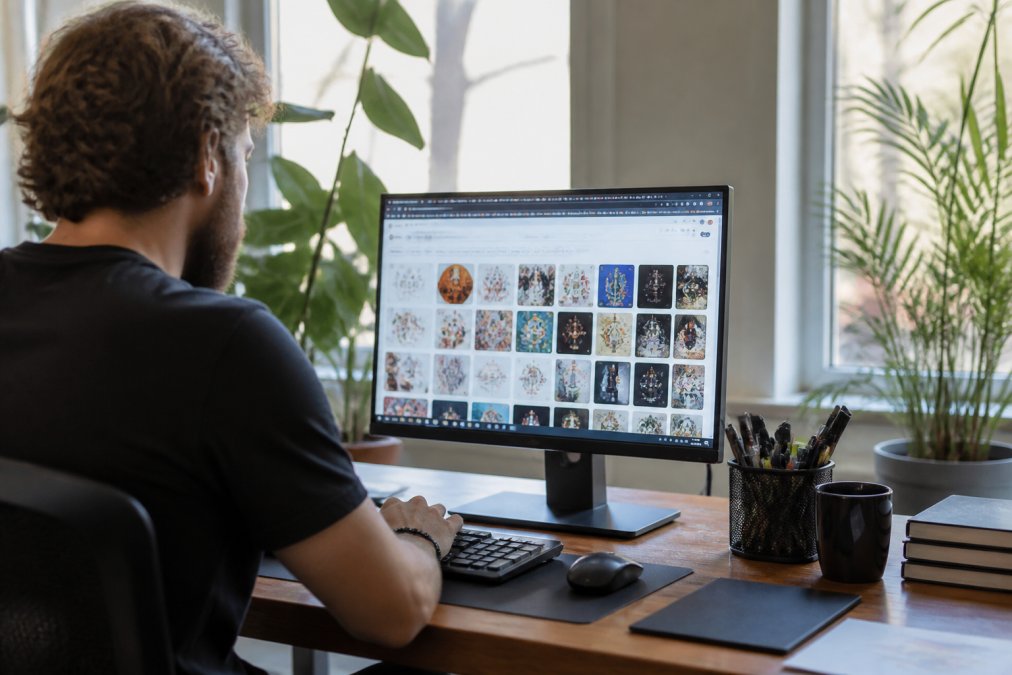
Other tools work too. TinEye specializes in image searches and shows historical data on when an image first appeared online. Bing Images has a reverse search feature. For serious verification, use multiple tools, different algorithms find different matches and can reveal whether an image has been modified or cropped.
Interpreting your search results: A legal framework
Finding matches doesn’t automatically mean theft. You need to understand what you’re seeing:
Single source with multiple authorized uses: If the design appears on the artist’s official website, their social media, licensed merchandise partners, and retail sites, this is normal. Original creators license their work to multiple sellers. This is legal and ethical.
Design appears on the original creator’s site first: Check upload dates and metadata. If the artist’s portfolio shows the earliest version, they own it. If another site predates the artist’s portfolio, that site may be the original creator.
Design on print-on-demand platforms (Redbubble, Teespring, Printful): These platforms host thousands of designs. A design appearing here doesn’t mean it’s stolen, the artist may have uploaded it themselves. Check the uploader’s profile. Do they have other designs? Do they claim to be the creator? Legitimate artists build portfolios on these platforms.
Matches on multiple unrelated retail sites: This is the red flag. If a design appears on 10+ different t-shirt sites with no clear original source, it’s likely been stolen and redistributed. Legitimate designs have a traceable origin point.
Matches with slight variations (color changes, text additions): Derivatives and remixes are common in design culture. The original design may be licensed under Creative Commons or similar frameworks that allow modification. Check the license terms on the original source.
Understanding copyright and licensing
Under the Digital Millennium Copyright Act (DMCA), original graphic designs are automatically copyrighted the moment they’re created, no registration required. However, creators can license their work in different ways:
- All rights reserved: Only the creator can use or distribute the design
- Creative Commons licenses: The creator allows specific uses (commercial, modification, attribution required) while retaining copyright
- Public domain: The creator has released copyright or it has expired
When you find a design online, look for license information. Check if the original source lists terms. A design appearing on multiple sites legally usually has clear licensing information visible.
Red flags that indicate actual theft
- Design appears on 5+ unrelated sites with no attribution to a single creator
- The earliest match is on a generic merchandise site, not an artist portfolio
- The design has been modified slightly (watermark removed, colors changed) across different sites
- Reverse search shows the image was uploaded to multiple sites within days of each other
- No artist name, signature, or watermark appears on the original design
- The site selling the design cannot provide artist information when asked directly
Step 2: How to Identify Authentic Graphic Art
Not all original designs are human-made anymore. AI tools can generate images in seconds. Some sellers pass these off as authentic artwork. Learning to spot the difference matters.
Spotting AI-generated designs versus human-made work
AI-generated images have tells. Look for these warning signs:
- Weird hands or fingers: AI struggles with hands. Count them. Look for extra fingers, missing fingers, or fingers that don’t bend right
- Strange text: AI often warps words. Letters might be backwards, overlapping, or impossible to read
- Blurry or melting details: Backgrounds especially tend to blur together in AI images
- Unnatural proportions: Bodies, faces, and objects often look slightly off
- Repeating patterns: AI sometimes repeats elements in strange ways
Human-made designs feel intentional. Every line has purpose. Details are clean and deliberate.
Check the artist’s portfolio. Do they have a consistent style? Do their other designs show real skill development? Legitimate artists build bodies of work. AI generators churn out random images.
Checking for copyright and attribution
Original graphic designs deserve credit. Real artists want their names attached to their work.
Look for artist signatures or watermarks on the design.
Step 3: Explore Best Platforms for Independent Graphic Designers
Finding original graphic designs means finding independent designers. These creators make unique work because they have creative freedom. They’re not constrained by corporate design committees. However, not all platforms are equal, some prioritize artist protection and transparency, while others enable design theft and obscure ownership.
Evaluating platforms by design ownership and artist protection
When choosing where to buy, assess these platform characteristics:
Portfolio transparency: Legitimate platforms require designers to maintain public portfolios showing their full body of work. Behance, Dribbble, and ArtStation require designers to link their work to verified accounts. This creates accountability. If a designer uploads stolen work, their portfolio history becomes visible and traceable. Platforms without portfolio requirements (generic print-on-demand sites) make it easier for bad actors to upload designs without verification.
Platform-specific guidance for sourcing original work
Behance and Dribbble: These are portfolio platforms, not storefronts. Designers showcase work here to build reputation and attract clients. If you find a design you love, contact the designer directly through their profile. They can create custom merchandise or direct you to authorized sellers. These platforms have strong design communities and peer review, which filters out low-quality work.
Independent brand websites: Many original designers sell directly through their own websites or Shopify stores. These often have the highest quality and most authentic designs because the designer controls everything. Look for:
- Designer bio or “About” page explaining their background
- Process documentation (sketches, design evolution, inspiration)
- Clear contact information
- Consistent visual identity across all designs
- Customer testimonials mentioning design originality
Direct artist collaboration and custom commissions
The most original graphic designs come from direct collaboration. You work with the designer. You explain your vision. They create something custom for you.
Step 4: Research Unique Graphic Tee Brands
Not all graphic tee brands are equal. Some prioritize profit over originality. Others build their entire business on unique designs and artist partnerships.
Evaluating brand authenticity and design ownership
Ask these questions before buying:
- Does the brand own its designs or license them? Brands that license designs from multiple artists tend to have more variety and originality
- Are there designer credits? Real brands credit their artists. They’re proud of the talent behind their products
- What’s the brand’s design process? Do they work with independent artists? Do they have in-house designers? Do they collaborate with communities?
- How long has the brand been around? Established brands have track records. You can research their history and reputation
The T-Shirt Barn carries brands like Axtacy Apparel, Good English Clothing, and Kush Dynasty League. These aren’t random licensees. They’re carefully selected partners who create original work. We verify that our designs are authentic before they appear in our collection.
Supporting independent designers through ethical purchases
Buying graphic tees is a vote. You’re supporting whoever created that design. Choose brands that support independent artists.
Common Mistakes to Avoid When Sourcing Designs
People make predictable errors when hunting for original graphic designs. Learning these mistakes saves time and money.
Frequently Asked Questions
How can you tell if a graphic design is original or stolen?
Use reverse image search tools like Google Images to check if a design appears elsewhere online. Look for inconsistencies in design quality, metadata, or artist attribution. Check the designer’s portfolio or website to verify they created the work. AI-generated designs often have subtle flaws in text, symmetry, or fine details that human-created work avoids.
What is the best way to identify authentic graphic art?
Authentic graphic art typically includes artist signatures, creation dates, and verifiable portfolio history. Check the designer’s social media, website, or professional profiles to confirm they created the piece. Examine the design’s visual language and consistency with their other work. Legitimate creators are transparent about their methods and happy to share their design journey. Be cautious of sellers who cannot provide this information or claim designs are original without evidence.
Where can I find designs from independent graphic designers?
Independent designers share work on portfolio platforms, design communities, and artist-run marketplaces. Many maintain personal websites or social media accounts showcasing their creative assets. Design magazines and digital archives feature emerging artists and their work. You can also commission custom designs directly from independent creators, ensuring complete originality. Platforms that emphasize artist verification and portfolio curation offer better transparency than mass-market sites. Supporting independent graphic designers directly ensures ethical sourcing and fair compensation for their creative work.
Why is supporting original graphic design important?
Original designs support artists financially and encourage creative innovation. When you purchase original work, you’re investing in someone’s artistic identity and design methodology. Mass-produced or stolen designs undermine independent creators and dilute the quality of visual culture. Supporting original graphic design preserves authentic visual storytelling and unique creative vision. It also ensures you’re getting genuine, high-quality work rather than copied or AI-generated alternatives. Ethical sourcing builds a stronger community of talented designers and sustainable creative practices.