Table of Contents
- Why Shoppers Are Looking for Urban Outfitters Alternatives for Graphic Tees
- Quick Comparison: What to Look For in Graphic Tee Brands
- Fabric Composition and Durability: What Actually Holds Up
- Affordable Graphic Tee Brands That Deliver on Quality
- Print Quality and Screen Printing: What to Check Before You Buy
- Sizing Inclusivity and Fit Guide for Oversized and Relaxed Styles
- How to Style Graphic Tees for Everyday Wear
- Conclusion
- Frequently Asked Questions
Last Updated: September 21, 2026
Why Shoppers Are Looking for Urban Outfitters Alternatives for Graphic Tees
Shoppers searching for urban outfitters alternatives for graphic tees share one frustration: they want distinctive designs without paying a premium for a logo on the tag. This guide from The T-Shirt Barn breaks down what matters when you compare options, from fabric weight to print method to fit.
A graphic tee says something about your taste without a word, but mainstream retail has turned that into a markup exercise: you pay more for the label than the shirt, and the design is often printed on a cotton blend thin enough to go see-through after a dozen washes.
That gap is where smaller, independent sellers have stepped in. Below, we’ll show you how to judge a graphic tee before you buy it, which materials hold up, and how to build a rotation you’ll actually wear.
Quick Comparison: What to Look For in Graphic Tee Brands
The fastest way to sort good graphic tees from bad ones is a five-point check: fabric weight, fiber content, print method, fit range, and return policy. Get those right and the logo stops mattering.
| What to Check | Weak Sign | Strong Sign | Why It Matters |
|---|---|---|---|
| Fabric weight | Feels thin, sheer | Dense, opaque hand feel | Survives repeated washing |
| Fiber content | Mostly synthetic | Higher cotton content | Breathes, holds print better |
| Print method | Faded or tacky surface | Ink sits in the fabric | Resists cracking |
| Fit range | One narrow cut | Multiple cuts and sizes | Works for more body types |
| Return policy | Store credit only | Clear, published terms | Lower risk on a gift |
Use this as a filter, not a scorecard.
Ask for the fabric weight before you buy, or check the product page for it. A tee with no stated weight is usually a tee the seller doesn’t want you to think about.
Fabric Composition and Durability: What Actually Holds Up
Durability comes down to two things: how much cotton is in the blend and how heavy the knit is. A 100% cotton tee at a solid weight outlasts a lighter cotton-poly blend, though blends resist shrinking better.
- Under 150 GSM (about 4.4 oz): Lightweight. Often semi-sheer in lighter colors. Fine for a layering piece, weak for daily wear.
- 150-180 GSM (about 4.4-5.3 oz): The standard retail tee range. Comfortable, but print and shape degrade faster under frequent washing.
- 180-220 GSM (about 5.3-6.5 oz): The sweet spot for graphic tees. Opaque, holds a screen print cleanly, and keeps its shape through repeated wash cycles.
- 220+ GSM (about 6.5 oz and up): Heavyweight. Holds an oversized silhouette without going limp, but takes longer to break in and can feel stiff at first.
Then match the fiber to the job.
- 100% cotton: Breathes well, takes screen printing cleanly, softens with age. Expect first-wash shrinkage, which is why pre-shrunk blanks are worth paying for.
- Cotton-poly blend: Holds shape, resists wrinkles, shrinks less. Watch for a slick, plasticky surface where ink sits on top rather than in the weave.
- Tri-blend (cotton/poly/rayon): Soft and drapey, popular for vintage looks, but pills faster under heavy wear.
- Heavyweight cotton: The sturdiest option. Holds an oversized fit without going limp and resists neckline stretch.
When a product page lists fabric weight, fiber content, and whether the blank is pre-shrunk, you have enough to predict how the tee will look after twenty washes. When it lists none of the three, you’re buying a surprise.
Affordable Graphic Tee Brands That Deliver on Quality
Affordable doesn’t have to mean disposable. Sellers that hold up publish fabric details, print in small batches, and carry designs you won’t see on every rack at the mall.
When you compare options, ask three questions:
- Does the seller list fabric weight and fiber content?
- Are the designs exclusive or mass-produced?
- Is the return policy published clearly and in plain language?
Exclusive labels and clear fabric specs are the two strongest signals that an affordable seller is competing on quality, not just on price.
Print Quality and Screen Printing: What to Check Before You Buy
Print quality decides whether a design survives a year. Screen printing pushes ink into the fabric, so the print flexes with the shirt, but “screen printing” and “DTG” are not interchangeable, the right choice depends on the design, color count, and how long you want the print to last.
- Screen printing: A stencil is burned onto a mesh screen, and ink is pushed through it into the weave. Durable, vibrant, and the standard for quality graphic tees. Best for bold designs with a small color count, each color needs its own screen. On a 180+ GSM cotton tee, a properly cured screen print typically outlasts the shirt itself.
- Direct-to-garment (DTG): A printer sprays ink onto the garment surface, like an inkjet. Good for detailed, full-color art, but ink sits closer to the surface, so it can fade faster and feel slightly raised. Best on 100% cotton; synthetics and dark blanks often need a pretreatment that affects hand feel.
- Heat transfer / vinyl: A film is pressed onto the shirt with heat. Cheap and fast for one-off designs, but prone to cracking and peeling at the edges. Fine for a novelty tee, weak for a daily wearer.
- Discharge printing: Removes dye from the fabric rather than adding ink, producing a soft, vintage finish that never cracks. Limited to certain dye and fabric combinations, so it’s less common and often commands a premium.
How to choose, in practice:
- Bold single-color or two-color graphic, worn weekly: Screen print on a mid-to-heavyweight cotton blank.
- Detailed illustration or photo, worn occasionally: DTG is the practical choice, and fading is an acceptable trade-off.
- Vintage, faded look you want on purpose: Discharge print, or a deliberately distressed screen print.
- Cheap novelty tee you’ll wear a handful of times: Heat transfer is fine, just don’t expect it to survive a hot dryer.
Match the print method to the design and the wear frequency, not to the price tag. A screen print on a heavyweight cotton blank is the most durable combination for a tee you’ll wear weekly; DTG is the right call when the artwork demands full color and you accept a shorter print life.
Sizing Inclusivity and Fit Guide for Oversized and Relaxed Styles
Fit is where most shoppers get burned, because “oversized” means something different at every seller. Shop by measurements, not the S, M, L label.
Here’s how the common cuts actually differ:
- Classic fit: Standard cut through the chest and waist. Sits close without clinging.
- Relaxed fit: Extra room in the body and sleeves. Drapes rather than hugs.
- Oversized fit: Deliberately dropped shoulders and a longer body. Meant to look loose.
- Baby tees: Cropped and fitted through the torso. A distinct silhouette, not a shrunken classic.
Never trust the word “oversized” on its own. Two sellers can use it for shirts that differ by several inches in the chest. Always check the flat measurements first.
How to Style Graphic Tees for Everyday Wear
Styling a graphic tee well comes down to balance: let the shirt be the loudest thing you’re wearing, then keep everything else quiet.
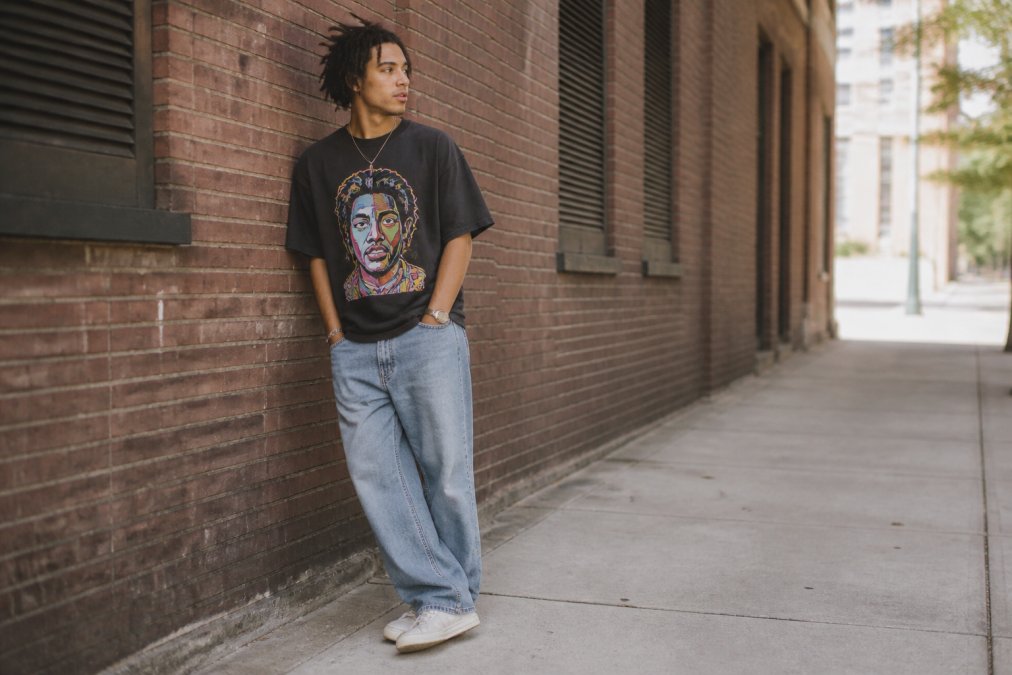
- Everyday casual: Pair a relaxed-fit tee with straight-leg jeans and clean sneakers. Tuck the front hem slightly to define your waist.
- Layered: Wear an open flannel or overshirt over a graphic tee. The print becomes an accent instead of the whole outfit.
- Dressed up slightly: Tuck a fitted tee into tailored trousers and add a jacket. Keep the graphic simple and the colors tight.
- Streetwear: Go oversized on top with a wider pant below. Balance the volume so you don’t look swallowed by fabric.
Conclusion
Sorting through urban outfitters alternatives for graphic tees comes down to a short list: check the fabric, check the print, check the fit chart, and buy from sellers who publish all three. That filter saves more money than any sale.
Frequently Asked Questions
What is a cheaper version of Urban Outfitters for graphic tees?
Several independent retailers and online marketplaces offer graphic tees at lower price points than Urban Outfitters without sacrificing quality. Look for brands that focus on direct-to-consumer sales, which cuts out retail markup. The T-Shirt Barn, for example, carries hundreds of designs from exclusive labels like Axtacy Apparel and Kush Dynasty League at affordable prices. Checking fabric weight and print method before buying helps you avoid cheap tees that fade or crack after a few washes.
How do I find unique graphic tees without the mainstream price tag?
Start with smaller retailers and online marketplaces that specialize in independent brands rather than mass-produced designs. Filter by niche themes like band shirts, retro graphics, or subculture-specific artwork. Read reviews that mention fit and feel, and check whether the retailer lists fabric composition. Many affordable graphic tee brands use cotton blends that hold up well over time, so you get durability without paying mall prices.
Are there affordable alternatives to Urban Outfitters that offer better quality?
Yes. Quality comes down to fabric weight, stitch construction, and print technique. Look for tees made from 100% cotton or a cotton blend with a weight of at least 5 ounces per square yard. Screen printed designs tend to last longer than heat-transfer prints. Independent retailers often provide this level of detail in their product descriptions, making it easier to compare before you buy.
How should I style an oversized graphic tee for a relaxed silhouette?
Pair an oversized graphic tee with fitted bottoms like slim jeans or bike shorts to balance the relaxed silhouette. Tuck the front hem slightly for shape, or knot one side for a cropped look. Layer under an open flannel or denim jacket for cooler weather. For a streetwear-inspired outfit, add chunky sneakers and a crossbody bag. Baby tees work well with high-waisted pants when you want a tighter fit.
Finding a graphic tee that fits right, prints well, and doesn’t cost a fortune shouldn’t take hours of scrolling. The T-Shirt Barn makes it simple: browse hundreds of designs, shop exclusive brands you won’t find everywhere else, and pay prices that respect your budget. Get started with The T-Shirt Barn and build a rotation of tees that hold up wash after wash.